
Introduction
Among the seven days of the week, one holds a place unlike any other in Islam. Friday — known as Jummah — is not simply the day before the weekend. For over a billion Muslims around the world, it is a weekly gathering of faith, reflection, and renewal, carrying a spiritual weight that Islamic scholars have described for centuries as unmatched by any other day.
At Hearted Blessing, we wanted to explore what actually makes Friday so significant in Islamic tradition — not just as a cultural greeting like “Jummah Mubarak,” but as a day rooted in the Quran, the sayings of the Prophet Muhammad (peace be upon him), and centuries of devotional practice.
In this guide, you’ll find the spiritual meaning behind Jummah, prayers commonly recited on this day, hadith-based reflections on its virtues, and a collection of Islamic quotes and messages you can share with loved ones. Whether you’re a practicing Muslim looking to deepen your understanding of the day, or simply curious about its significance, this article walks through it with care and respect.
1. What Makes Friday Blessed in Islam?
Friday holds a status in Islam that no other day shares. It is the day of Jumu’ah — the congregational prayer that brings Muslim communities together in a way that no other weekly obligation does. Unlike the five daily prayers performed individually or in smaller groups, Jummah calls the wider community into one place, standing shoulder to shoulder, to hear a sermon (khutbah) and pray together.
This isn’t simply a scheduling matter. According to hadith, this day was specifically chosen and favored by Allah over the days observed by earlier nations. One hadith notes that Saturday was given to the Jewish community and Sunday to the Christian community, while earlier generations disagreed over which day to set aside — leaving Friday as the day granted to the Muslim ummah. That detail alone tells you something about how central this day is considered within the faith’s history.
2. The Spiritual Significance of Jummah
Beyond the act of communal prayer, Friday carries symbolic and theological weight tied to some of the most significant events described in Islamic tradition. According to a hadith reported by Abu Huraira, the Prophet described Friday as the day Adam was created, the day he entered Paradise, the day he was expelled from it, and the day the Final Hour will take place.
That single narration ties together the beginning of humanity and its ultimate end to one day of the week — which is part of why scholars describe Friday not just as a “good day,” but as a day woven into the very structure of creation itself.
The Quran reinforces this significance directly. In Surah Al-Jumu’ah, believers are instructed that when the call to prayer is made on Friday, they should hasten to the remembrance of Allah and set aside their trade and business — a command described in the verse as being better for those who understand its value. This is one of the few instances in the Quran where an entire chapter is named after a specific day, underscoring how central this observance is meant to be in a believer’s week.
3. Key Hadith About the Virtues of Friday
Islamic tradition preserves numerous sayings of the Prophet Muhammad (peace be upon him) describing the unique status of this day. Here are some of the most frequently cited, paraphrased respectfully rather than quoted at length:
- Friday as the best day of the week: Multiple hadith describe Friday as the most virtuous day upon which the sun rises, tying its significance to major events in the story of Adam.
- A day free of blazing punishment: Some scholarly traditions note that among the days of the week, Friday is described as a day when the fires of Hell are not stoked, marking it as a day of mercy.
- Protection from the trial of the grave: Several narrations describe dying on a Friday, day or night, as being associated with a form of protection from certain trials after death — understood by scholars as a sign of the day’s blessed nature rather than something to be sought out.
- A weekly Eid: The Prophet is reported to have described Friday as a kind of weekly festival that Allah has established for Muslims, encouraging believers to bathe, use perfume if available, and use a tooth-stick (siwak) in preparation for it.
These narrations, taken together, paint Friday not as an ordinary point in the calendar, but as a recurring opportunity for spiritual renewal — arriving fresh, every single week.
4. The Hour of Acceptance: A Unique Blessing of Jummah
Perhaps one of the most talked-about aspects of Jummah among practicing Muslims is the belief in a special hour on Friday during which supplications are especially likely to be accepted. <cite index=”8-1″>According to a hadith narrated in Sahih Al-Bukhari, there is an hour within the day of Jummah during which a Muslim standing in prayer and asking Allah for something will have that request granted.</cite>
Scholars differ on the exact timing of this hour — some place it in the final portion of the day before Maghrib, others tie it to the period between the imam sitting down for the khutbah and the completion of the prayer. Because the precise timing isn’t agreed upon, many Muslims choose to increase their supplication throughout the entire afternoon rather than trying to pinpoint the exact minute.
This uncertainty is often described by scholars not as a flaw, but as a form of divine wisdom — encouraging believers to stay mindful and engaged in prayer throughout the day, rather than treating devotion as a single transaction at a fixed time.
5. Sunnah Practices to Observe on Friday
For Muslims looking to observe the day fully, tradition offers a number of recommended practices (sunnah) that go beyond simply attending the prayer itself:
- Perform ghusl (ritual bath) before heading to the mosque, as a form of physical and spiritual preparation.
- Wear clean, presentable clothing and use perfume or fragrance if available.
- Arrive early for the congregational prayer rather than rushing in at the last moment.
- Recite Surah Al-Kahf, which many scholars encourage reading on Fridays specifically.
- Increase in sending salutations (durood/salawat) upon the Prophet Muhammad throughout the day.
- Give charity (sadaqah), which some scholars describe as carrying particular reward on this day.
- Listen attentively to the khutbah, avoiding distraction or conversation during the sermon.
- Increase personal supplication (dua), especially in the later hours of the afternoon.
None of these practices are meant to feel like a checklist to rush through. Together, they’re designed to slow a person down — to turn an otherwise ordinary day into a deliberate, unhurried act of worship.
6. Prayers to Recite on a Blessed Friday
While the Friday prayer itself follows a set structure, many Muslims also use this day for personal, heartfelt supplication in their own words. Here are a few reflections you might use as inspiration for your own dua — not fixed religious texts, but sincere prayers in the spirit of the day:
A prayer of gratitude: “O Allah, thank You for allowing me to witness another Friday. Forgive what I have fallen short in this week, and accept the good that I managed to do.”
A prayer for guidance: “O Allah, guide my heart toward what pleases You, and keep me steady on the right path in the week ahead.”
A prayer for the ummah: “O Allah, grant ease to Muslims everywhere who are struggling — those facing hardship, illness, or fear. Be near to them on this blessed day.”
A prayer for personal need: “O Allah, in this hour when prayers are answered, I ask You for [state your need honestly and specifically] — and I trust Your wisdom in how and when You respond.”
A prayer for the Prophet: “O Allah, send Your peace and blessings upon Muhammad, as You sent peace and blessings upon Ibrahim, for You are Praiseworthy and Glorious.”

7. Islamic Quotes and Messages for Jummah
If you’re looking for short reflections to share with family, friends, or on social media, here are original lines inspired by the spirit of the day rather than direct scriptural quotation:
“Friday arrives like a weekly invitation — to slow down, to gather, and to remember.”
“A blessed Jummah isn’t just a greeting. It’s a reminder that this day was chosen for a reason.”
“Every Friday is a fresh chance to ask, to hope, and to trust in the answer.”
“The congregation on Friday is a small picture of unity — different lives, one purpose.”
“Jummah Mubarak isn’t just words. It’s a wish for someone’s prayers to be answered.”
Simple Jummah Mubarak Messages to Share
- “Jummah Mubarak! May this blessed day bring you peace, answered prayers, and closeness to Allah.”
- “Wishing you and your family a peaceful Jummah, filled with reflection and gratitude.”
- “May today’s prayers be accepted and this week’s efforts be rewarded. Jummah Mubarak.”
- “Sending you blessings this Friday — may Allah ease your burdens and answer your dua.”
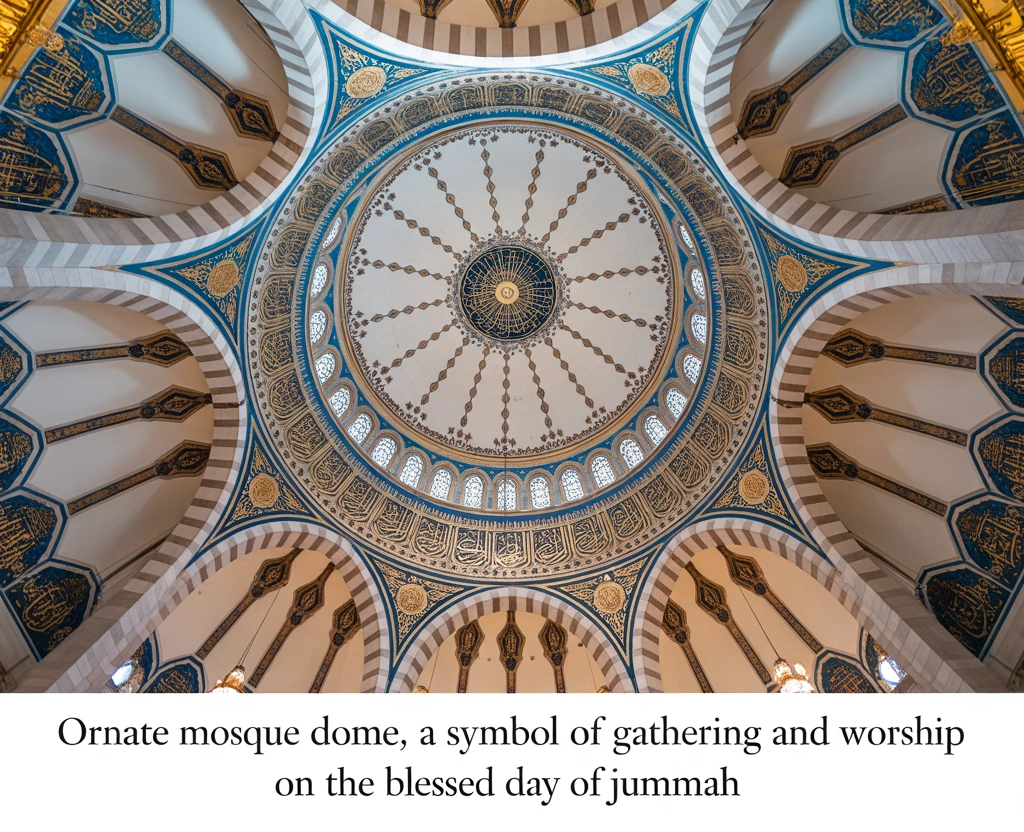
8. How Muslims Around the World Observe Jummah Mubarak
While the core elements of Jummah — the khutbah and congregational prayer — remain consistent globally, the day is observed with cultural variation across different Muslim communities:
- In many Middle Eastern countries, businesses adjust their hours around midday to allow employees time to attend the mosque.
- In South Asian communities, it’s common for families to prepare a special Friday meal after prayer, often shared with extended family or neighbors.
- In Western countries, many Muslims coordinate with employers or universities in advance to ensure they can attend Friday prayer during a workday, and mosques often offer multiple prayer time slots to accommodate different schedules.
- Across nearly all cultures, sending “Jummah Mubarak” greetings — by phone, text, or social media — has become a widely shared, simple way of extending the blessings of the day to others.
This blend of shared ritual and local custom is part of what makes Jummah such a unifying yet personal observance across the global Muslim community.
9. Common Mistakes to Avoid on This Blessed Day
A few respectful reminders worth keeping in mind, based on common scholarly guidance:
- Don’t treat the khutbah as optional listening. Talking or being distracted during the sermon is discouraged, as attentive listening is considered part of the reward of the day.
- Don’t rush your ghusl and preparation. The recommended practices exist to help you arrive present and unhurried, not just technically on time.
- Don’t limit “Jummah Mubarak” to just a greeting. Pairing the phrase with genuine reflection or a small act of charity gives the day more meaning than the words alone.
- Don’t skip personal dua because you’re unsure of the exact hour of acceptance. Increasing supplication throughout the afternoon is the safer, more encouraged approach.
Frequently Asked Questions
1. What does Jummah mean in Islam? Jummah refers to Friday, specifically the congregational prayer performed by Muslims in place of the midday (Dhuhr) prayer, along with the broader spiritual significance the day holds in Islamic tradition.
2. Why is Friday considered the best day of the week in Islam? Several hadith describe Friday as the day Adam was created and entered Paradise, and the day the Final Hour is expected to occur, giving it a unique status tied to major events in Islamic belief.
3. What is the “hour of acceptance” on Friday? It refers to a specific, though not precisely agreed-upon, hour during Friday when supplications made by a believer in prayer are especially likely to be accepted, according to hadith.
4. What should Muslims do to prepare for Jummah prayer? Common recommended practices include performing ghusl, wearing clean clothing, using perfume if available, arriving early, and reciting Surah Al-Kahf.
5. Is it necessary to attend the mosque for Friday prayer? Jummah prayer is considered obligatory for adult Muslim men who are able to attend, and it is performed in congregation rather than individually, which is part of what distinguishes it from the five daily prayers.
6. What does “Jummah Mubarak” mean? It’s a common greeting meaning roughly “Blessed Friday,” used to wish someone a spiritually meaningful and blessed day.
7. Can women observe Jummah at the mosque? Yes, women are welcome to attend Friday prayers at the mosque, though attendance is not obligatory for them in the way it is for men, and many choose to pray Dhuhr at home instead.
8. Is charity on Friday considered more rewarding than on other days? Many scholars point to hadith suggesting that charity given on Friday carries particular merit, though acts of charity are encouraged and rewarded on any day.
9. What is recommended to read on Friday specifically? Reciting Surah Al-Kahf is a widely encouraged practice on Fridays, based on hadith describing spiritual benefit associated with it.
Final Thoughts
Friday in Islam is far more than the end of a working week. It’s a day carried by centuries of tradition, scripture, and shared devotion — a weekly reminder for Muslims around the world to pause, gather, reflect, and ask sincerely for what their hearts need.
Whether you observe Jummah through the congregational prayer, quiet personal dua, or simply by sharing a heartfelt “Jummah Mubarak” with someone you care about, the spirit of the day remains the same: gratitude, humility, and hope in a mercy that renews itself every single week.
May this Friday, and every one after it, bring you closer to peace.
Internal Linking Suggestions for Hearted Blessing
- “Friday Afternoon Blessings: Prayers, Quotes & Images to Close Your Week in Peace” — natural cross-reference for readers exploring Friday across different faiths.
- “The Meaning and Etiquette of Dua in Islam” — deepens the prayer-focused sections of this article.
- “Ramadan Reflections: Prayers and Quotes for a Blessed Month” — links to another major Islamic observance.
- “Sunnah Practices for Everyday Muslims: A Beginner’s Guide” — expands on the sunnah section above.
- “Interfaith Reflections: How Different Traditions Honor a Day of Rest” — connects this piece to the broader multi-faith content on the site.