
Introduction
There’s a particular kind of morning that only really works with a cup of tea or coffee, a decent book, and somewhere proper to sit with both. Not the sofa—somewhere with a bit of light, a bit of quiet, and enough charm that you actually want to get up ten minutes earlier for it. That’s the whole appeal of a window reading nook, and it’s exactly why they’ve become one of the most-saved home ideas on Pinterest.
The good news: you don’t need a big house or a renovation budget to make one work. A bay window, a quiet alcove, or even an overlooked corner near natural light can become a proper little reading spot with the right cushions, some thoughtful lighting, and a bit of intention. Here’s how to build one that actually gets used — not just admired for a week and forgotten.
1. Why a Window Reading Nook Is Worth Making Space For
Older homes especially tend to have at least one window with a bit of extra depth, a deep sill, or a quiet corner nearby that practically begs for a cushion and a good book. Even newer homes usually have some underused patch of natural light — near a landing, a bedroom corner, or beside a hallway window — that can be claimed for exactly this purpose.
There’s also the mood factor. A gray, overcast morning feels a lot less flat when you’ve got a warm, well-lit corner to retreat to with a hot drink. A good reading nook doesn’t need perfect weather to work — it can make even a dreary morning feel like an invitation to slow down rather than rush through.

2. Bay Window Reading Nooks: A Timeless Choice
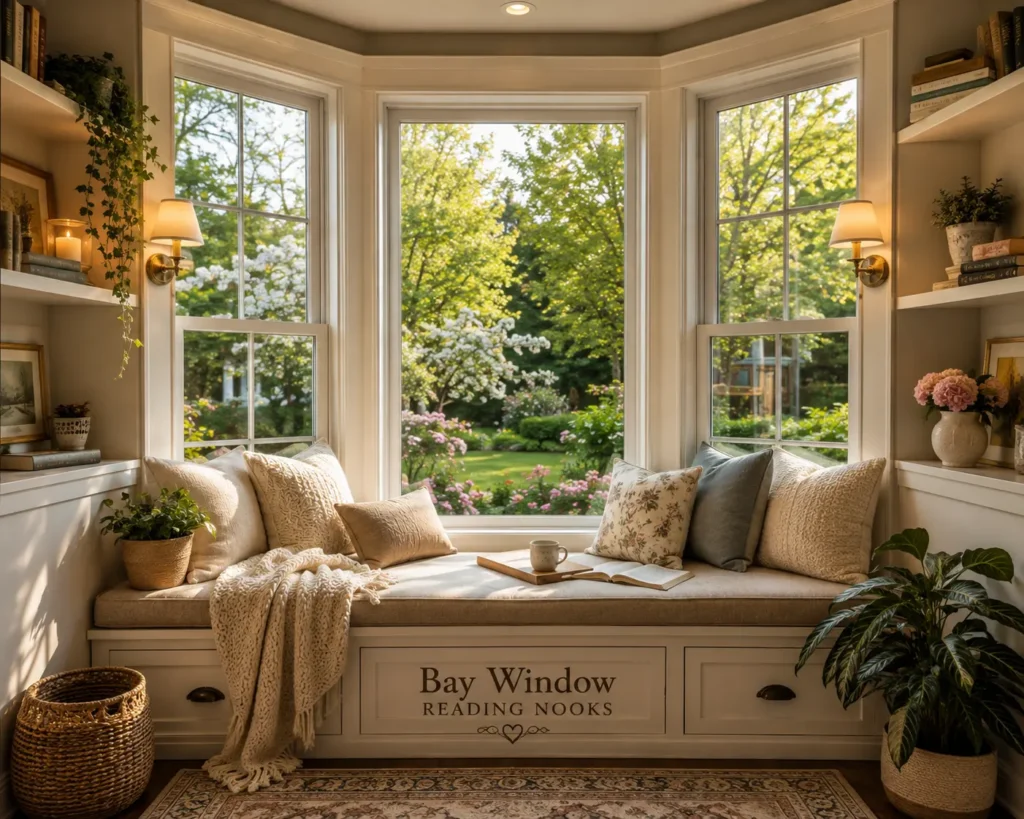
If your home has a bay window, you’ve already got the bones of a beautiful reading nook without buying a single piece of furniture.
- Add a fitted or custom-cut cushion across the sill for comfortable, proper seating.
- Layer smaller cushions and a chunky throw on top for texture and warmth, rather than one flat cushion alone.
- Keep curtains or blinds soft and sheer on one side to let morning light in without losing privacy.
- Add a small side table or shelf ledge for a mug, a lamp, and whatever you’re currently reading.
3. Small Space Reading Nook Ideas for Apartments
No bay window? No problem. Plenty of the most-saved reading nook ideas on Pinterest come from small apartments, not sprawling houses.
- Use a single armchair angled toward the window rather than trying to fit a full sofa into a tight spot.
- Float a simple floor cushion or pouf under a window for a low-cost, low-commitment nook that doesn’t need extra furniture.
- Repurpose an unused corner or landing—even a small patch of space near natural light can work with a small chair and a lamp.
- Add a wall-mounted shelf instead of a side table to save floor space while still keeping books and a mug within reach.
4. Choosing the Right Cushions, Throws and Textures
The difference between a nook that looks nice in photos and one people actually curl up in usually comes down to texture, not color scheme.
- Mix at least two textures — a chunky knit throw with a smooth linen cushion tends to look more inviting than one flat fabric type.
- Go for muted, warm tones — sage green, oatmeal, dusty rose, or soft terracotta photograph beautifully and suit most existing color palettes.
- Prioritize comfort over perfection. A slightly rumpled throw looks more “lived in and loved” than a stiffly arranged one — and it’s exactly that lived-in look that tends to perform well on Pinterest.

5. Getting the Morning Light Right
Morning light is really the whole point of a morning reading nook, so it’s worth getting right.
- Face the nook east if possible, to catch the earliest, softest light.
- Use sheer curtains rather than blackout blinds on the reading side of the window, even if you keep blackout elsewhere in the room.
- Add a warm-toned lamp for darker mornings — winter months mean plenty of reading sessions before the sun’s fully up.
- Avoid overhead lighting in this corner. A single warm lamp or the window itself creates a much cozier feel than a bright overhead bulb.
6. Budget-Friendly Styling Tips
A reading nook doesn’t need a big budget to look properly finished.
- Look for affordable window seat cushions and throws at home goods stores — most carry simple, textured options in neutral tones that photograph well.
- Check secondhand shops and online marketplaces for a small side table, vintage lamp, or wooden crate that can double as book storage.
- A simple tension rod and curtain can soften a plain window inexpensively if you don’t already have curtains in that spot.
- Repurpose what you already own — an old armchair, a spare cushion, or a throw from another room can be the starting point before you buy anything new.
7. Adding Storage Without Losing the Cozy Feel
- Use a window seat with built-in storage underneath, ideal for smaller homes where every bit of space needs to earn its keep.
- Add a small woven basket beside the seat for current reads, rather than a bulky bookshelf that can make the corner feel cramped.
- Mount a single floating shelf above the window for a few favorite books and a small plant, keeping the floor space clear.

Frequently Asked Questions
1. What’s the best window for a reading nook? An east-facing window works best for morning light, though a bay window of any orientation is a strong choice thanks to its natural depth and seating potential.
2. Do I need a window seat to create a reading nook? No — a single armchair or floor cushion positioned near natural light works just as well, especially in smaller homes without a bay window.
3. What cushion fabrics work best for a window seat? Durable, washable fabrics like cotton or linen blends tend to hold up best, especially near a window where sunlight can fade weaker materials over time.
4. How can I create a reading nook on a small budget? Start with an existing chair or window sill, add a couple of affordable cushions and a throw, and prioritize lighting over new furniture.
5. What size photo works best for Pinterest pins of home decor? A vertical 2:3 ratio, roughly 1000 x 1500 pixels, tends to perform best in Pinterest’s feed and search results.
6. How do I stop a window seat from getting too cold in colder months? Layer a thicker throw, check for drafts around older windows, and add a warm-toned lamp nearby for both light and a bit of extra coziness.
7. What’s the best plant for a reading nook window? Low-maintenance options like a pothos or peace lily tend to thrive in indirect light and add a nice visual layer without needing much care.
Final Thoughts
A morning window reading nook isn’t really about the furniture—it’s about creating one small reason to slow down before the day gets busy. Whether you’ve got a beautiful bay window or just a modest patch of space near natural light, a few cushions, the right throw, and some morning sun are usually all it takes to build a corner worth waking up for.